
According to the American Kennel Club, the French Bulldog has been the most popular dog
breed in the United States since 2022. Here at Lyndale Animal Hospital, we certainly see plenty
of our beloved Frenchies, along with many other smushed-face type breeds. In medical terms,
we call all those dogs brachycephalic. This means that their skull is wider and shorter than the
average dog, resulting in a flattened facial appearance. While this makes them look absolutely
adorable, it can also result in health concerns. We specifically worry about Brachycephalic
Obstructive Airway Syndrome (BOAS), which refers to how this anatomy affects their ability to
breathe.
When we breed dogs to have a brachycephalic face, we affect the structures that make up their
upper and lower airways in multiple ways.
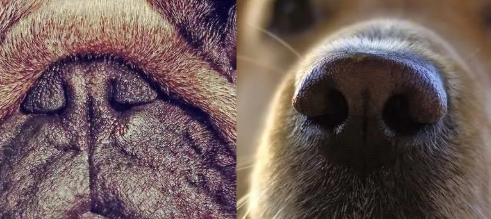
- Narrow Nostrils: Brachycephalic dogs tend to have narrower nostrils compared to other
breeds. This limits the amount of air they can inhale at one time, and increases the
resistance to breathing. Because dogs primarily breathe through their nose, this greatly
affects the ease of breathing. You can imagine how this feels by pinching your nostrils
partially closed and trying to breathe just through your nose.
- Hypertrophy of Nasal Turbinates: Behind the nostrils, the nose contains scrolling structures of bone, cartilage, and tissue called nasal turbinates. These contain the sensory receptors for smell, and also help warm air before it is inhaled into the lungs. In brachychephalic dogs, the same amount of nasal turbinates are squeezed into a much smaller nose space. This again increases resistance to breathing. It also means their sense of smell is not as keen as other kinds of dogs.
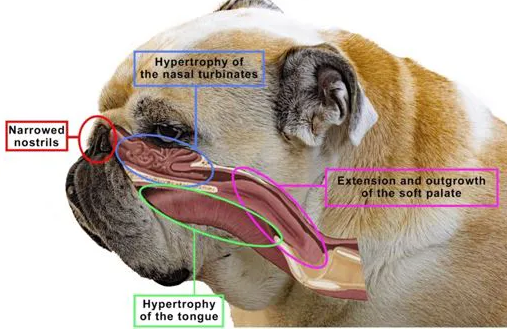
- Extension of the Soft Palate: The soft palate is what makes up the roof of the mouth after the bony part ends. It is important in separating the nose from the mouth, but ends before the windpipe (trachea) and esophagus start. In brachycephalic dogs, their soft palate is longer than it should be. All this extra tissue at the back of their throat again causes resistance to breathing. It also physically obstructs the entrance to their trachea. When you hear a brachycephalic snorting or snoring, that sound comes from their soft palate flapping and causing partial obstruction to breathing in their throat.
- Hypertrophy of the Tongue: Brachycephalic dogs also have a larger tongue compared to the size of their head than typical dogs. If you have ever seen a bulldog pant, you know this is true! This large tongue extends to the back of their throat, and again causes obstruction of their airway and resistance to breathing.
- Hypoplastic Trachea: Many smushed-face dogs have abnormalities of their respiratory tract that extend behind their face and head. For example, they may have a hypoplastic trachea. This means their windpipe is smaller in diameter compared to their body size. You can imagine the effects of this by thinking about breathing through a straw. They simply cannot inhale as much air at one time as other dogs can.
Brachycephalic airway syndrome (BOAS) can range in severity. For some dogs, it may just cause snoring, while others can develop significant respiratory distress. Concerning symptoms indicating your dog may be struggling to breathe include increased effort with breathing (often more tummy movement), gulping air, gray/purple gums, breathing with their neck extended in “sphynx pose,” extreme lethargy, or collapse. We see these episodes of distress more commonly during hot weather, after exercise, or when dogs are stressed or excited. Your veterinarian is the best person to assess your dog’s respiratory health, and if you have any concerns, please reach out to them.
There are some things we can do to help our brachycephalic friends breathe easier. First, there are surgical repairs that can be performed for their narrow nostrils, nasal turbinates, or elongated soft palates. The nostrils can be widened to improve the amount of air flowing through them. The soft palate can be trimmed and shortened at the back of the throat to minimize obstruction and resistance in this area. There is also a procedure where laser therapy can be used to break down nasal turbinates and limit resistance to airflow. Again, your veterinarian can assess if your dog would benefit from any of these procedures.
For any brachycephalic dogs, there are some precautions we recommend taking to avoid triggering an episode of respiratory distress. We recommend avoiding activities during extremely hot or humid weather, or conversely very cold weather. Ideally these dogs would be exercised in the morning or evening rather than the heat of the day. They are typically not suited to prolonged exercise, as they have difficulty keeping up with the extra oxygen needed to sustain this. Brachycephalic dogs tolerate shorter, more frequent low-impact activities better. We also know a harness helps to minimize any strain on the throat or windpipe, and recommend this over a collar. The single most effective strategy we have to help these dogs is keeping them at a healthy lean weight. We know increased weight both enlarges the extra tissue at the back of the throat, and puts extra strain and pressure on the respiratory system. If you have further questions about keeping your dog healthy, please reach out to your veterinarian.